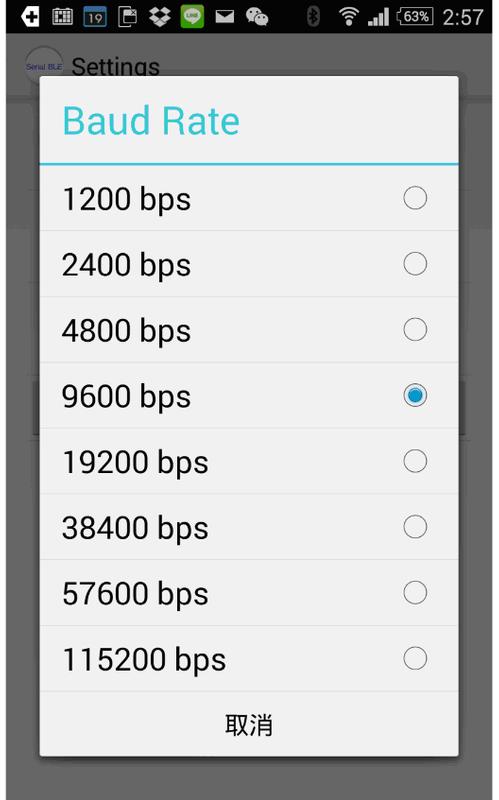
The Serial port Bluetooth module is fully qualified Bluetooth V2.0+EDR (Enhanced Data Rate) 3Mbps Modulation with complete 2.4GHz radio. Up to +4dBm RF transmit power; Low Power 1.8V Operation,1.8 to 3.6V I/O; PIO control; UART interface with programmable baud rate; Integrated antenna; Edge.
public final class BluetoothSocket extends Object implements Closeable
| java.lang.Object | |
| ↳ | android.bluetooth.BluetoothSocket |
A connected or connecting Bluetooth socket.
The interface for Bluetooth Sockets is similar to that of TCP sockets: Socket and ServerSocket. On the server side, use a BluetoothServerSocket to create a listening server socket. When a connection is accepted by the BluetoothServerSocket, it will return a new BluetoothSocket to manage the connection. On the client side, use a single BluetoothSocket to both initiate an outgoing connection and to manage the connection.
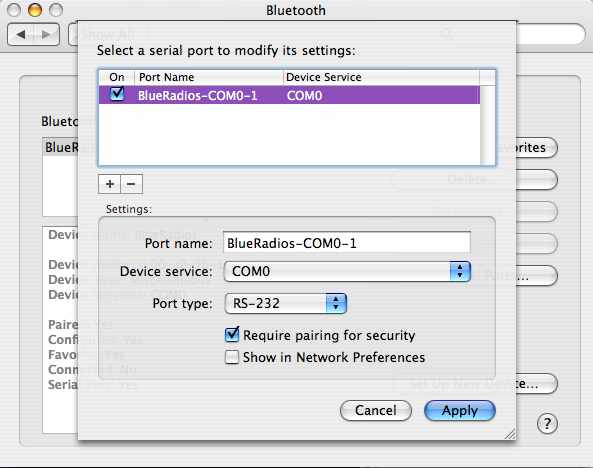
The most common type of Bluetooth socket is RFCOMM, which is the type supported by the Android APIs. RFCOMM is a connection-oriented, streaming transport over Bluetooth. It is also known as the Serial Port Profile (SPP).
To create a BluetoothSocket for connecting to a known device, use BluetoothDevice#createRfcommSocketToServiceRecord. Then call connect() to attempt a connection to the remote device. This call will block until a connection is established or the connection fails.
To create a BluetoothSocket as a server (or 'host'), see the BluetoothServerSocket documentation.
Once the socket is connected, whether initiated as a client or accepted as a server, open the IO streams by calling getInputStream() and getOutputStream() in order to retrieve InputStream and OutputStream objects, respectively, which are automatically connected to the socket.
BluetoothSocket is thread safe. In particular, close() will always immediately abort ongoing operations and close the socket.
Note: Requires the Manifest.permission.BLUETOOTH permission.
Developer Guides
For more information about using Bluetooth, read the Bluetooth developer guide.
See also:
Summary
Constants | |
|---|---|
int | TYPE_L2CAPL2CAP socket |
int | TYPE_RFCOMMRFCOMM socket |
int | TYPE_SCOSCO socket |
Public methods | |
|---|---|
void | close() Closes this stream and releases any system resources associated with it. |
void | connect() Attempt to connect to a remote device. |
int | getConnectionType() Get the type of the underlying connection. |
InputStream | getInputStream() Get the input stream associated with this socket. |
int | getMaxReceivePacketSize() Get the maximum supported Receive packet size for the underlying transport. |
int | getMaxTransmitPacketSize() Get the maximum supported Transmit packet size for the underlying transport. |
OutputStream | getOutputStream() Get the output stream associated with this socket. |
BluetoothDevice | getRemoteDevice() Get the remote device this socket is connecting, or connected, to. |
boolean | isConnected() Get the connection status of this socket, ie, whether there is an active connection with remote device. |
Inherited methods | |||||||||||||||||||||||
|---|---|---|---|---|---|---|---|---|---|---|---|---|---|---|---|---|---|---|---|---|---|---|---|
From class java.lang.Object
| |||||||||||||||||||||||
From interface java.io.Closeable
| |||||||||||||||||||||||
From interface java.lang.AutoCloseable
| |||||||||||||||||||||||
Constants
TYPE_L2CAP
L2CAP socket
Constant Value: 3 (0x00000003)
TYPE_RFCOMM
RFCOMM socket
Constant Value: 1 (0x00000001)
TYPE_SCO
SCO socket
Constant Value: 2 (0x00000002)
Public methods
close
Closes this stream and releases any system resources associated with it. If the stream is already closed then invoking this method has no effect.
As noted in AutoCloseable#close(), cases where the close may fail require careful attention. It is strongly advised to relinquish the underlying resources and to internally mark the Closeable as closed, prior to throwing the IOException.
| Throws | |
|---|---|
IOException | |
connect
Attempt to connect to a remote device.
This method will block until a connection is made or the connection fails. If this method returns without an exception then this socket is now connected.
Creating new connections to remote Bluetooth devices should not be attempted while device discovery is in progress. Device discovery is a heavyweight procedure on the Bluetooth adapter and will significantly slow a device connection. Use BluetoothAdapter#cancelDiscovery() to cancel an ongoing discovery. Discovery is not managed by the Activity, but is run as a system service, so an application should always call BluetoothAdapter#cancelDiscovery() even if it did not directly request a discovery, just to be sure.
close() can be used to abort this call from another thread.
| Throws | |
|---|---|
IOException | on error, for example connection failure |
getConnectionType
Get the type of the underlying connection.
| Returns | |
|---|---|
int | one of TYPE_RFCOMM, TYPE_SCO or TYPE_L2CAP |
getInputStream
Get the input stream associated with this socket.
The input stream will be returned even if the socket is not yet connected, but operations on that stream will throw IOException until the associated socket is connected.
| Returns | |
|---|---|
InputStream | InputStream |
| Throws | |
|---|---|
IOException | |
getMaxReceivePacketSize
Get the maximum supported Receive packet size for the underlying transport. Use this to optimize the reads done on the input stream, as any call to read will return a maximum of this amount of bytes - or for some transports a multiple of this value.
| Returns | |
|---|---|
int | the maximum supported Receive packet size for the underlying transport. |
getMaxTransmitPacketSize
Get the maximum supported Transmit packet size for the underlying transport. Use this to optimize the writes done to the output socket, to avoid sending half full packets.
| Returns | |
|---|---|
int | the maximum supported Transmit packet size for the underlying transport. |
getOutputStream
Get the output stream associated with this socket.
The output stream will be returned even if the socket is not yet connected, but operations on that stream will throw IOException until the associated socket is connected.
| Returns | |
|---|---|
OutputStream | OutputStream |
| Throws | |
|---|---|
IOException | |
getRemoteDevice
Get the remote device this socket is connecting, or connected, to.
| Returns | |
|---|---|
BluetoothDevice | remote device |
isConnected
Android Bluetooth Serial Terminal
Get the connection status of this socket, ie, whether there is an active connection with remote device.
Android Bluetooth Serial Port
| Returns | |
|---|---|
boolean | true if connected false if not connected |